
- Adding friction reduces automatic scrolling habits
- Mindfulness timers help reset drifting attention
- App migration turns social media into intentional use
- Greyscale mode reduces screen appeal and usage
- Blocking apps creates accountability and supports consistency
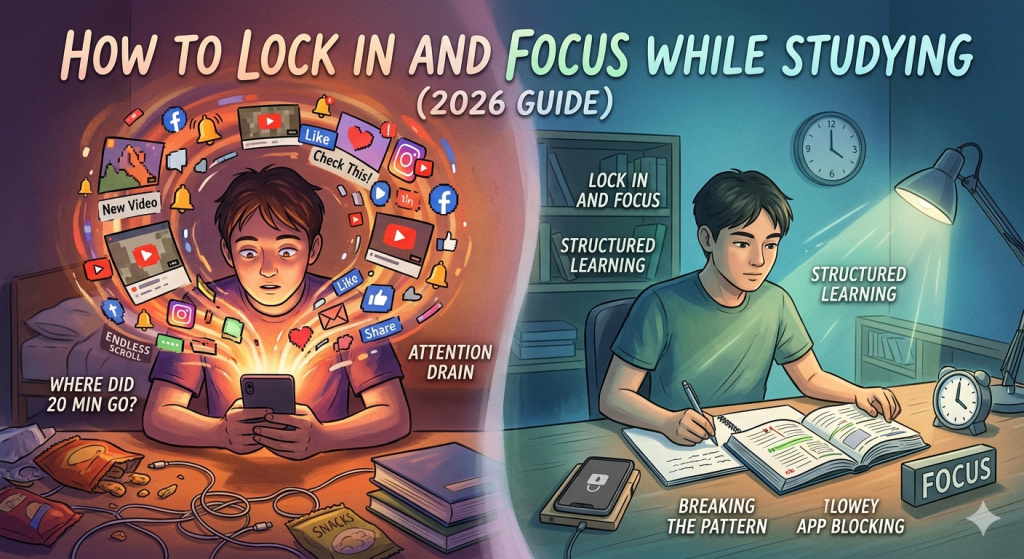
You open your phone for one quick check, and suddenly 20 minutes disappear without warning. That is the doomscroll trance. It feels harmless, but it quietly drains your attention and makes studying feel harder than it is.
Your brain gets used to fast, endless stimulation: short videos, quick hits of novelty, and constant switching. When you sit down to study, everything feels slow and boring in comparison. That is why focusing suddenly feels like a struggle.
If you want to learn how to lock in and focus while studying, you need to break this pattern first. Find out how to escape doomscrolling and the right tools to make this task easier.
How to End the Doomscroll Trance that Breaks Your Focus
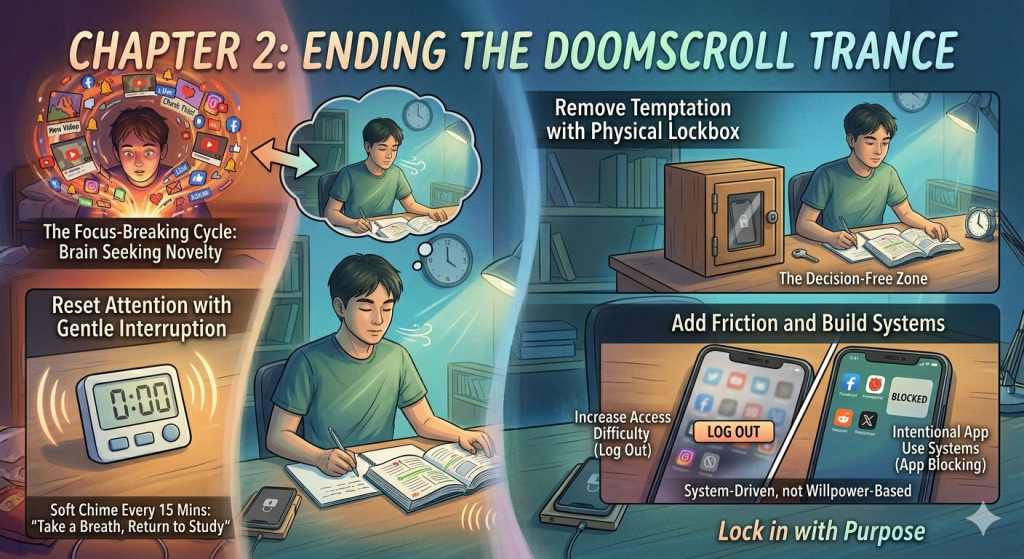
When you try to study, your brain remembers how easy and rewarding your phone feels. Compared to that, studying feels slower and less exciting. This is where your focus starts to break.
Here are a few ideas that can break this cycle and help you stay on track when studying:
- Reset your attention with simple interruptions: use gentle timers during study sessions. These are soft sounds that play every few minutes and bring your attention back. You can set a timer every 10 or 15 minutes. When it rings, take a breath, notice where your attention is, and guide it back. Over time, this builds awareness and control without forcing it.
- Remove temptation and train your brain: pick a physical lockbox, place your phone inside and remove the option completely. It may sound extreme, but it works because it removes the decision. You are no longer fighting the urge to check your phone.
- Add friction instead of relying on willpower: this means making distractions slightly harder to access. Small barriers can completely change your behavior. You can log out of apps, move them off your home screen, or completely block your access to open them while you study (some apps can help you do it, and you can find out more below). When you do this, you stop relying on motivation and start building a system that supports you.
With these simple ideas, learning how to lock in and focus while studying becomes easier when every action has a purpose. Instead of reacting to your phone, you start using it with intention.
How to Use Aps to Improve Focus Instantly
Sometimes, focus is not about doing more. It is about removing what keeps pulling you away.
App Migration and Preventing the Social Media Attraction
This means moving distracting apps off your phone and using them only on your laptop. It creates a small barrier that breaks automatic checking.
When you need to open social media, it becomes a conscious choice. You sit down, open your laptop, and use it with intention. That tiny delay changes everything. It stops mindless scrolling and helps your brain stay in study mode longer.
If you are learning how to lock in and focus while studying, this is one of the fastest changes you can make.
Reduce Screen Temptation With Simple Tweaks
Your phone is designed to look exciting. Bright colors, smooth animations, and endless content keep you coming back.
Greyscale mode removes that visual stimulation. Everything becomes neutral, almost boring, and much easier to ignore. You may notice that apps lose their appeal quickly. You open them less often and spend less time inside.
It is not a magic fix, but it supports your focus by making distractions less attractive. Combined with other strategies, like blocking your phone while studying, it becomes very effective in the long run.
Block Temptations with Apps
Sometimes, the hardest part of studying is not the work itself. It is resisting the constant pull of your phone. That is where apps designed to block distractions can make a real difference.
Tools like One Goal: Locked In are built to remove temptation completely. Instead of fighting your habits, you change the environment around you. You set a goal, lock your phone, and focus only on the task in front of you.
This works because:
- It removes the decision. You are no longer asking yourself if you should check your phone. The option is simply not there.
- Accountability. When you tie phone access to completing a task, you create a clear reason to stay focused. You are not just studying. You are working toward unlocking your time again.
If you are trying to learn how to lock in and focus while studying, this kind of system can help you stay consistent. It supports you on days when motivation is low and distractions feel stronger than usual.
You can also combine this with other strategies. Use the app during timed study sessions and pair it with other ideas presented in this article, like the greyscale mode, to prevent doomscrolling even more. The goal is to build a setup that works for you.

Lock In and Focus While Studying Using Simple Tricks
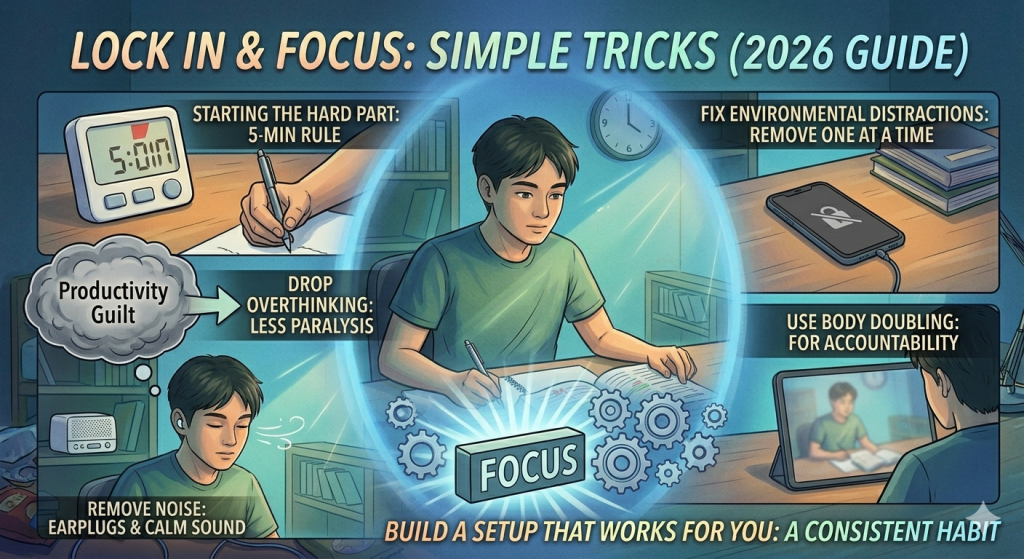
One of the biggest reasons you cannot start studying is task paralysis. Everything feels too big, so you do nothing. This is where the 5-minute rule helps. You commit to working for just five minutes. No pressure to finish anything.
Once you start, resistance drops. Most of the time, you keep going without forcing yourself. Starting is the hardest part.
Another thing that pushes you to grab your phone is productivity guilt. It tricks you into thinking you should always be doing more. Instead of helping, it freezes you in place. You overthink, delay, and lose momentum.
If you want to learn how to lock in and focus while studying, you need to drop this mindset and start using these tricks:
- Study with clear time blocks: use clear, measurable time blocks. For example, study for 25 or 50 minutes with a specific task in mind. When the goal is clear, you know exactly what to do and when you are done.
- Fix environmental distractions: start by noticing what pulls your attention away and remove one distraction at a time. Clear your desk, silence notifications, or change your study spot.
- Set up a dedicated focus zone at home: keep it simple, clean, and used only for focused work. When you sit there, your brain starts to associate that space with studying. Over time, it becomes easier to lock in without effort.
- Use body doubling to stay on track: this means studying alongside someone else, either in person or online. This creates a sense of accountability. You are less likely to get distracted when someone else is also focused.
- Remove noise without overcomplicating it: start with simple solutions like earplugs, white noise, or instrumental music. When your environment feels calm and controlled, it becomes much easier to lock in and focus while studying.
Conclusion
Learning how to lock in and focus while studying is not about forcing yourself to try harder. It is about building a system that makes focus easier and distractions harder. The key is to keep it simple and consistent. You do not need to apply everything at once. Start with one or two strategies, test what works for you, and build from there.
FAQs
What is the 1/3,5/7 rule in studying?
The 1/3, 5/7 rule means reviewing material after 1 day, 3 days, 5 days, and 7 days. It uses spaced repetition to improve memory, helping you retain information longer instead of forgetting it quickly.
How can I focus 100% while studying?
You cannot stay at 100% focus all the time, but you can get close. Remove distractions, use timed study blocks, and start with small tasks. Create a clear system, not just motivation, so focus becomes easier and more consistent.
How to be locked in when studying?
To lock in while studying, remove distractions, set a clear task, and start small. Use timed sessions, create a dedicated study space, and limit phone access. Focus comes easier when your environment supports it, not when you rely on willpower alone.
How to get straight A’s in high school?
To get straight A’s, stay consistent with daily study sessions, focus in class, and review material regularly. Break tasks into small steps, use active recall, and manage distractions so you can stay locked in while studying.
What are the signs of poor focus?
Common signs include frequent phone checking, trouble starting tasks, losing track of time, rereading without understanding, and getting distracted easily. You may feel busy but make little progress and struggle to stay on one task.