- A better environment makes better choices feel automatic
- A boring phone is less tempting to keep checking
- Physical barriers help break fast, impulsive phone use
- Hard systems work better than temporary motivation
- Offline micro-habits make idle moments easier to handle
You open your phone for one quick thing, and suddenly 20 minutes disappear. You don’t even remember what you watched. That’s what people now call “temporal theft.” Your time gets quietly taken without you noticing.
Apps in 2026 are built to stretch your attention, not respect it. The goal is simple: keep you engaged longer than you planned. That’s why learning how to reduce screen time feels so frustrating. You are pushing against systems designed to win.

Why Discipline Alone Fails in 2026
Discipline doesn’t work well when temptation is always one tap away. Your phone is built for ease and speed. And when you’re tired, your brain wants the easiest option available.
Real progress starts when you stop relying on motivation. You begin shaping your surroundings so the right choice feels automatic.
Think of your phone as a tool, not a source of entertainment. Right now, it’s designed to pull you in constantly. But you can change that.
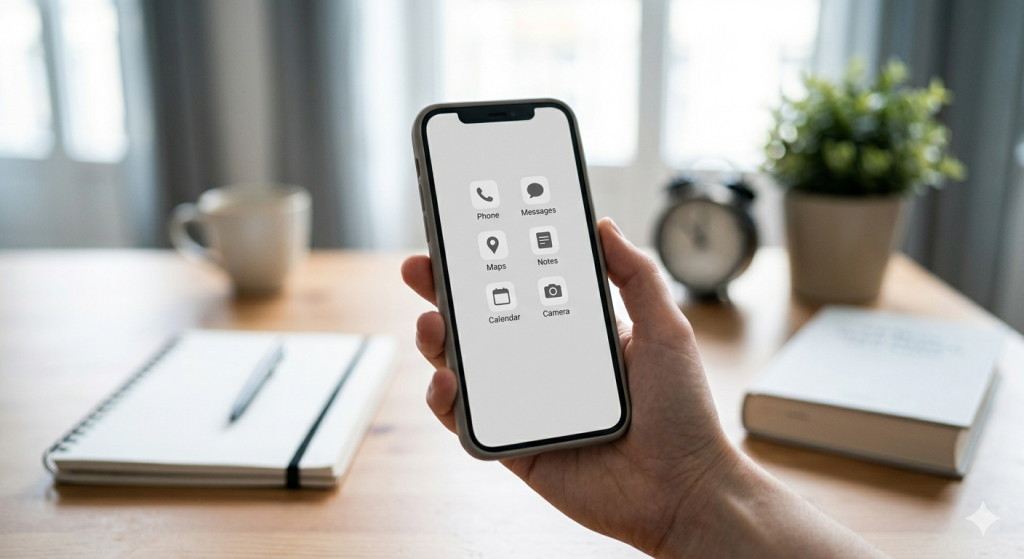
- Remove visual triggers. Bright icons, notifications, and endless feeds are built to grab your attention. When you reduce them, your phone feels less tempting.
- Simplify your home screen. Keep only what you truly need. Fewer options mean fewer impulsive actions.
- Decide when you check apps instead of checking them randomly.
Over time, your phone becomes quieter and less stimulating. And something interesting happens. When your phone gets boring, your life outside starts to feel more engaging again.
What “Friction” Really Means
Friction sounds complicated, but it’s actually simple. It means making unwanted actions slightly harder to do. Not impossible, just inconvenient enough to slow you down.
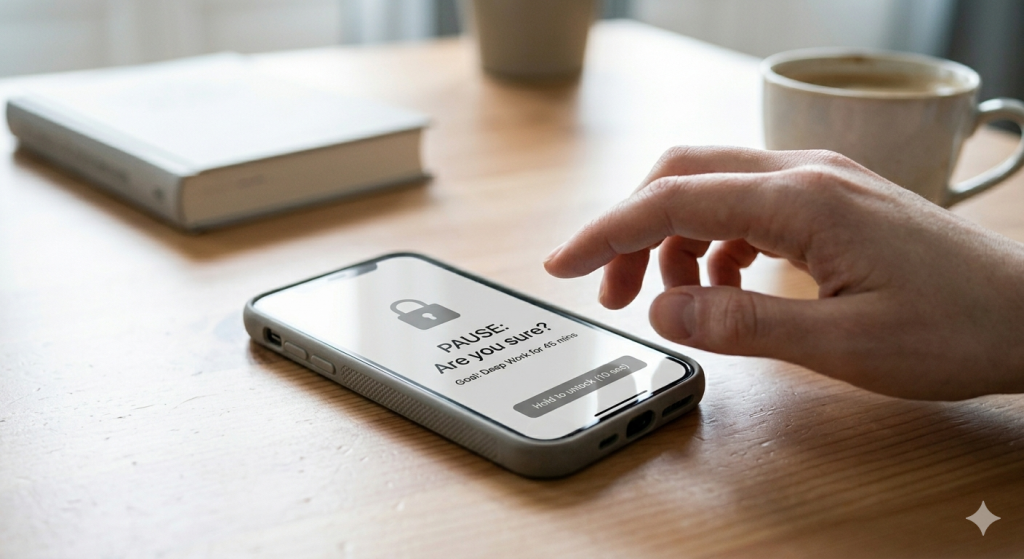
Right now, your phone has zero friction. You tap once, and you’re inside an app designed to keep you there. There is no pause, no moment to think.
That’s why learning how to reduce screen time starts here. You don’t remove access completely. You just add small obstacles between you and the habit.
Physical Barriers That Break Phone Habits
Sometimes, the best solution is not digital. It’s physical. When your phone is always in your hand, habits become automatic.
One effective method is using apps that lock access with intention. Tools like One Goal: Locked In create a clear boundary between you and distractions. Instead of relying on willpower, you commit upfront. Once you lock in, the decision is already made. You don’t negotiate with yourself every five minutes.
You can also create simple physical distance. Leave your phone in another room. Charge it away from your desk. Even a small distance reduces impulse. These barriers work because they remove the “easy option.” When something takes effort, your brain naturally looks for alternatives.
Digital Environment Design That Slows You Down
Your phone layout matters more than you think. Every icon, color, and notification is designed to pull your attention instantly.
You can flip that system in your favor. Make your phone less exciting and more neutral:
- Move distracting apps away from your main screen.
- Turn off non-essential notifications.
- Change how you access content.
Friction works so well because motivation feels strong in the moment, but it fades quickly. That’s because it depends on your mood. And your mood changes all the time. On the other hand, friction removes the need to decide again and again. The system guides your behavior automatically.
If you truly want to learn how to reduce screen time, stop relying on motivation. Build systems that do the work for you.
Why Night Scrolling Feels Impossible to Stop
Night scrolling feels different from daytime scrolling. You are tired, your guard is down, and your brain wants something easy. That’s the perfect setup for endless scrolling. You tell yourself, “Just one more video.” The problem is that scrolling does not actually help you rest.
Instead, it keeps your mind stimulated when it should be slowing down.
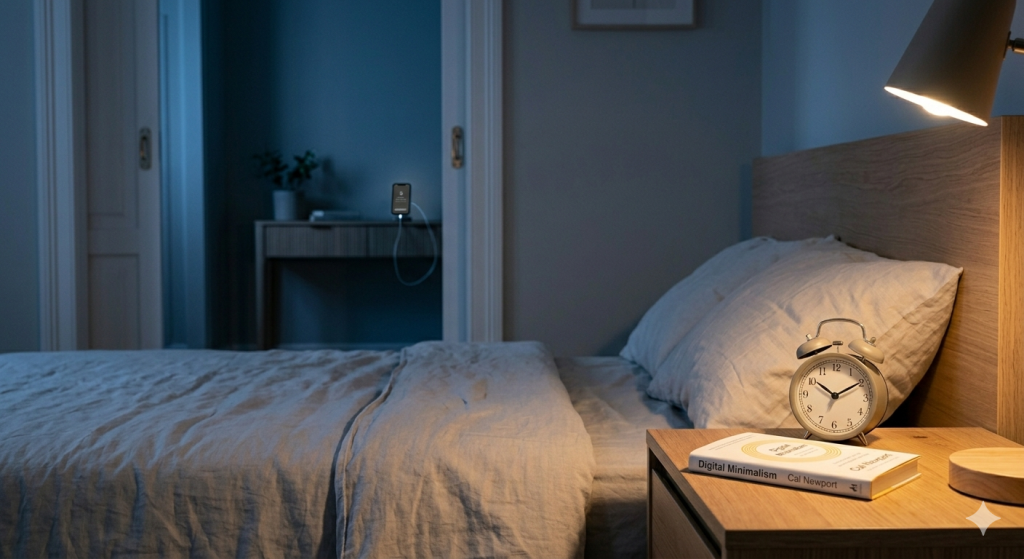
One of the simplest changes is also the most powerful. Don’t keep your phone in your bedroom. When your phone is next to your bed, the decision to scroll is effortless. You wake up, reach for it, and the cycle starts again.
By charging your phone in another room, you remove that automatic habit. Now, using your phone requires a conscious decision.
Many people replace their phone with a simple alarm clock. This removes the “I need my phone nearby” excuse completely.
Another thing you can try is replacing your scrolling habit with something easier and calmer. A book, a journal, or even quiet music can work. These options don’t overstimulate your brain as a screen does.
It’s important to remember that your night routine shapes how easily you fall asleep. If your last hour is full of stimulation, your brain stays active longer. You can prevent this by setting a clear “phone off” moment. Even 20 – 30 minutes before sleep makes a difference.
When your evenings become quieter, your sleep improves. And when your sleep improves, everything else becomes easier.
The “Waiting Mode” Trap Explained
You have 10 minutes before a meeting, or waiting in line, or sitting in the car. And almost instantly, your hand reaches for your phone. This is what many people call “waiting mode.” Your brain feels stuck between tasks, so it looks for something easy to fill the gap.
The problem is not the time itself. It’s how automatic the response has become. When you’re waiting, there’s no clear task, so your mind looks for stimulation. Your phone offers the fastest reward possible. It’s quick, familiar, and always available. That’s why it becomes the default.
Over time, your brain learns a pattern. Gap equals phone. Boredom equals scrolling. And the habit becomes automatic. The more you repeat it, the harder it feels to sit still without doing anything. Silence starts to feel uncomfortable instead of normal.
But this pattern can be changed once you understand it.
1. Build Offline Micro-Habits for Idle Moments
- Instead of trying to eliminate the habit, replace it with something simple. Your brain still wants something to do, just not something overwhelming.
- Think of small, low-effort actions. Look around and notice details. Take a few slow breaths. Stretch your body. Even doodling works.
The key is to keep it easy. If the replacement feels like work, you will go back to scrolling.
2. Train Your Brain to Accept Boredom Again
Boredom is not a problem. It’s a reset for your brain. It’s where ideas form, and your mind slows down. If you pause and stay in that moment, something changes. The urge fades faster than you expect:
- Over time, your tolerance for stillness grows.
- You stop needing constant input to feel okay.
If you truly want to master how to reduce screen time, this is where it clicks. You don’t fill every gap anymore. You let your mind breathe.

Conclusion
Reducing screen time in 2026 is about becoming a smarter designer of your own life. Your phone will always try to be the easiest option. Your job is to make that option a little less automatic and a lot less tempting.
So do not aim for a perfect digital detox. Aim for a phone that is boring enough to stop stealing your time. Because when your screen takes up less space, your real life finally has room to get interesting again.
FAQs
What is the 3 6 9 12 rule for screen time?
The 3-6-9-12 rule is a child screen-use guide: no screens before 3, no game consoles before 6, no internet before 9, and no social media before 12. It’s a guideline for gradual exposure, not a strict law.
Is 7 hours screen time ok?
Seven hours may be okay if much of it is work or school, but 7 hours of recreational screen time is generally a lot. If it crowds out sleep, movement, or real-life activities, it’s probably too much.
What is Gen Z’s average screen time?
Gen Z’s average screen time is often reported at about 6 hours 27 minutes a day on phones, though the exact number varies by study and country.
How to cut down screen time to the extreme?
To cut screen time drastically, add hard barriers: delete non-essential apps, block distracting sites, charge your phone outside the bedroom, use app locks, and replace scroll time with offline defaults like books, walks, or a basic alarm clock.