- Deep-lock apps block distractions during study sessions
- Gamified timers make focus feel more rewarding
- Low-dopamine breaks help your brain reset properly
- Focus progress should be tracked without guilt
You may think studying is about discipline, but your phone has other plans. The problem is not that you are weak. Your phone is designed to be interesting. Social apps, videos, messages, and quick searches all offer instant rewards. Studying usually requires patience, focus, and effort.
That is why willpower often loses. Your brain has to resist the phone again and again. This is where apps to help you study without phone distractions can make a real difference by making distractions harder to reach.
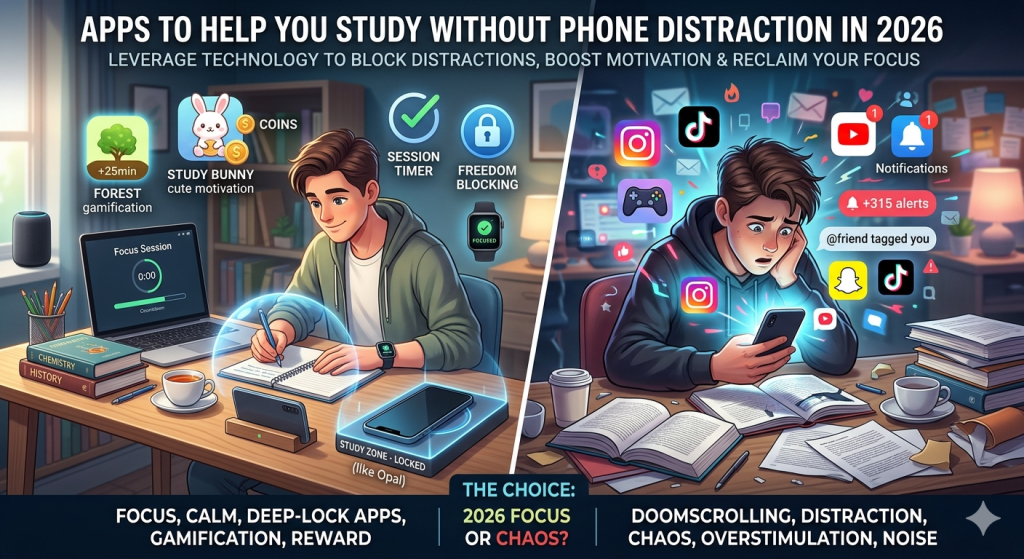
Apps & Habits That Block Distractions Properly
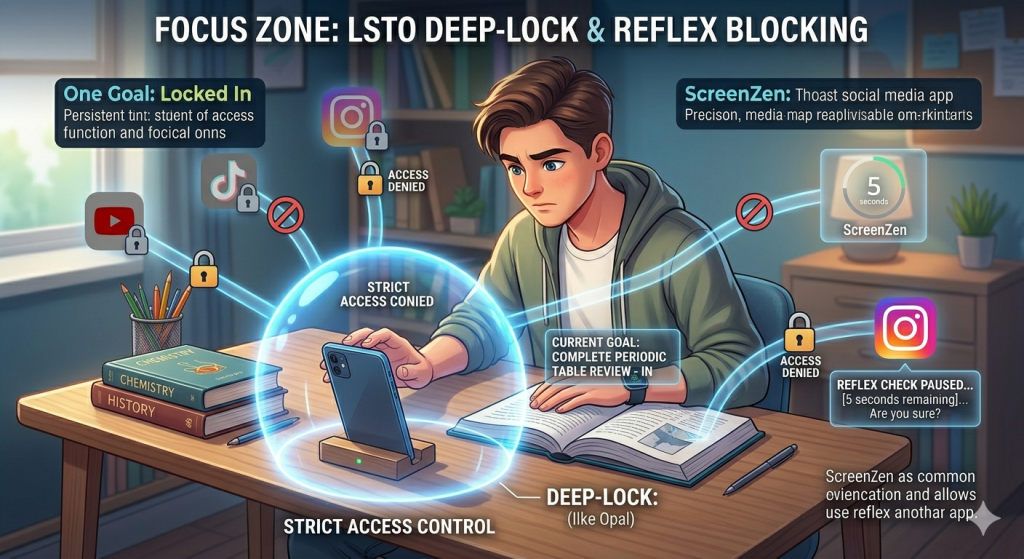
Deep-lock apps are useful when “I’ll just ignore my phone” has failed for the 47th time. These apps block access to distracting apps during study sessions, so you cannot casually drift into TikTok, Instagram, YouTube, or games.
- Opal is a strong option if you need strict focus blocks. It can block distracting apps and websites during scheduled sessions, which means fewer negotiations with yourself.
- One Goal: Locked In is useful when you want your study session tied to one clear purpose. Instead of opening your phone and wandering around, you set one goal first. That tiny step helps you remember why you picked up your phone.
- ScreenZen works well if your main problem is reflex checking. It adds a pause before opening distracting apps, so your brain gets a second to ask, “Do I actually need this?”
- Session is helpful for students who like structured focus blocks. It combines Pomodoro-style sessions with blocking features, so you can revise in clear, protected chunks.
- Freedom is a good choice if distractions follow you across devices. It can block websites and apps on different screens.
This matters because distraction often starts without a plan. The best apps to help you study without phone distraction interrupt the habit before your thumb turns studying into a mini entertainment festival.
Gamified Timers and Low-Dopamine Breaks
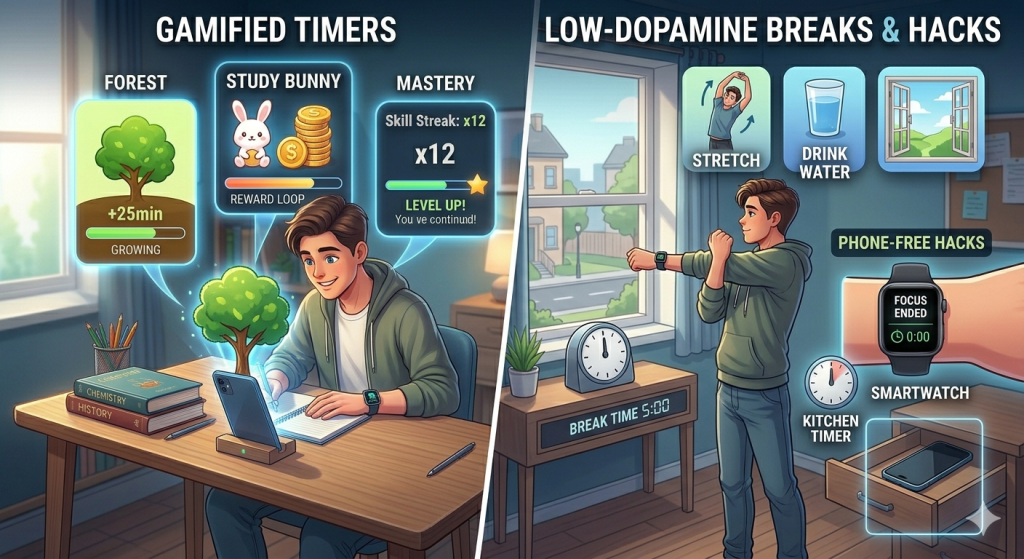
Gamified timers make focus feel less boring:
- Forest is a classic example. You grow a virtual tree while you study, and if you leave too early, the tree withers. Slightly dramatic? Yes. Weirdly effective? Also yes.
- Study Bunny works well if you like cute motivation. You study to earn coins, care for your bunny, and decorate its little world. It turns focus into a small reward loop.
- Mastery is another good option for students who enjoy progress tracking and game-like structure. It can make study sessions feel more like building a skill streak, rather than forcing yourself through endless revision.
Still, your breaks matter too. If you study for 25 minutes, then spend five minutes doomscrolling, your brain does not really rest. It just gets overstimulated.
Try low-dopamine breaks instead:
- stand up,
- stretch,
- drink water,
- look outside,
- walk around the room.
The best setup is a combination of all 3:
- blockers during study time,
- gamified timers for motivation,
- calm breaks for recovery.
Smartwatch and Timer Hacks for Phone-Free Studying
One sneaky reason students pick up their phones is the timer excuse. You tell yourself you only need to check the time.
A simple workaround is using a smartwatch, kitchen timer, alarm clock, or laptop timer instead. This lets you track study blocks without touching your phone. Less touching means fewer accidental side quests.
You can also put your phone in another room during serious revision. If that feels too extreme, place it across the room, face down, with notifications off. Distance makes impulse checking harder.
The goal is to remove unnecessary contact. Your phone cannot hijack your focus as easily when you are not physically holding it.
Smarter Study Setups That Replace Willpower
In 2026, the best study systems feel realistic. They do not pretend your phone is useless. They understand it can be both a tool and a trap.
You may need your phone for flashcards, calendars, notes, or school messages. That does not mean you need TikTok beside your chemistry revision.
The healthier future is selective access. Keep what supports studying. Block what steals attention. Add friction where your habits are weakest.
And please, protect your breaks too. That is the real shift. You are not trying to defeat your phone forever. You are teaching it to stop interrupting your education.
Students Also Ask
What is the app that helps you study and not get distracted?
Apps like One Goal: Locked In, Opal, Forest, ScreenZen, and Study Bunny can help you study without distractions by blocking apps, adding pauses, or making focus feel more rewarding.
How to study without getting distracted by phone?
Put your phone in another room, use app blockers during study time, and write “Google later” notes instead of browsing. Take low-dopamine breaks like stretching or walking, not scrolling.
How can I focus 100% while studying?
You may not focus 100% perfectly, but you can get close. Remove your phone, block distracting apps, study in short timed sessions, and take calm breaks. Deep focus comes from fewer interruptions, not perfect willpower.
How to be a 1% student?
To be a 1% student, protect your focus daily. Study before distractions, keep your phone away, use blockers when needed, review consistently, and take real breaks. Small habits repeated often beat last-minute panic.