- Turn off noisy, non-human notifications.
- Use app blockers to create friction before scrolling.
- One Goal blocks automatic app-opening habits.
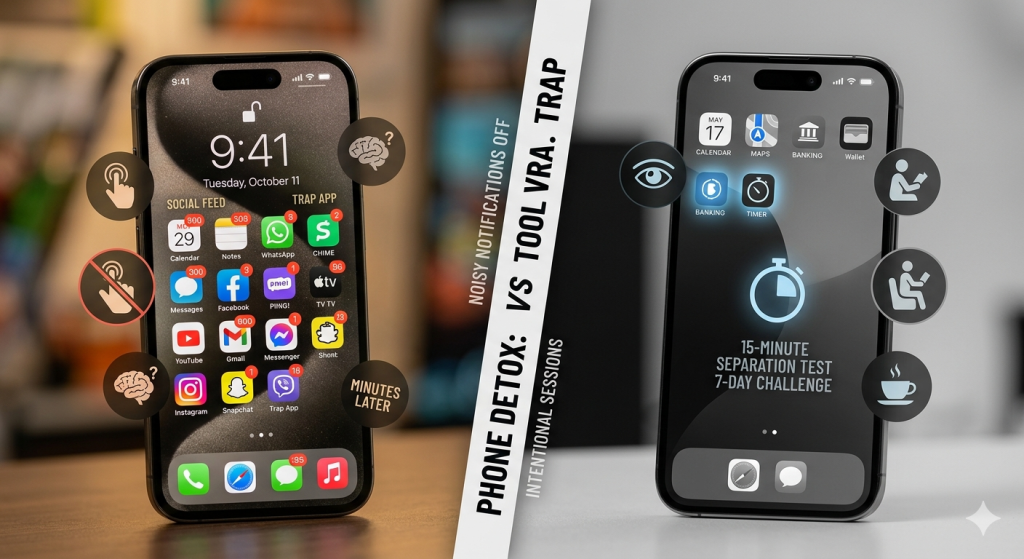
- A 15-minute phone break reveals hidden triggers.
- Take the 7-day challenge & 15-minute separation test
If you are learning how to detox from phone addiction, quitting your phone completely can sound brave. Sadly, it often works for about six heroic hours. Then you need maps, banking, messages, parking, work codes, or your child’s school app. Suddenly, your “digital detox” becomes a very stressful scavenger hunt.
Cold turkey fails because your phone is not only a distraction machine. It is also a normal life tool. The better goal is to stop letting it boss you around, and here’s how you can do it.
Apps That Help You Detox Without Going Off-Grid
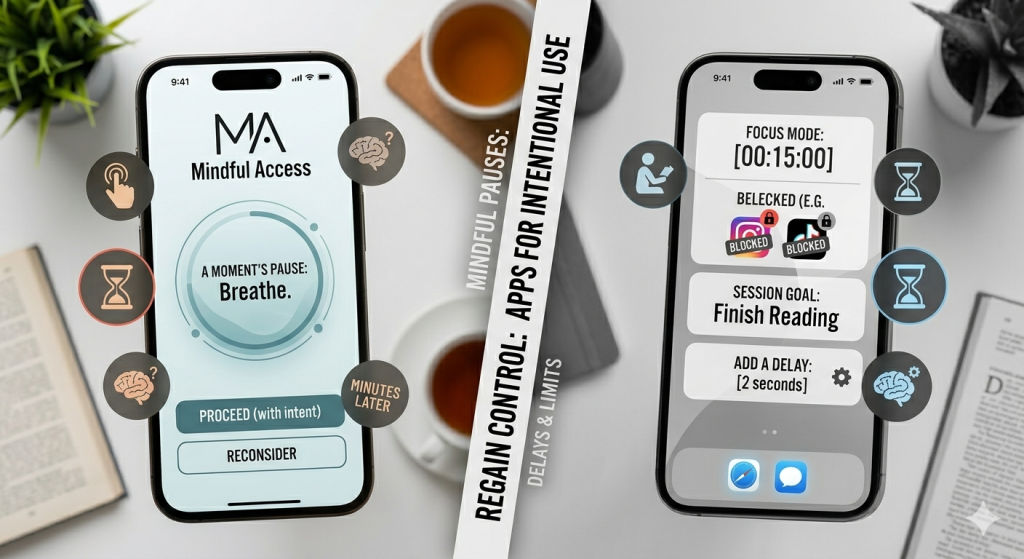
If you are learning how to detox from phone addiction, the right app can help you build better pauses. The goal is not to punish yourself, but to make scrolling less automatic and your phone less bossy.
1. One Goal: Locked In
One Goal is useful when your biggest problem is reflexive tapping. You open an app before you even decide to. Instead of relying on willpower, One Goal helps you return to one clear intention. You set your goal, turn on the timer, and keep distractions away until you are done.
2. One Sec
One Sec adds a breathing pause before you open distracting apps. It feels tiny, but that delay matters. You get a moment to ask, “Do I actually want this?” Sometimes, the answer is no.
3. ScreenZen
ScreenZen lets you add delays, app limits, and opening rules. It is great if basic screen timers are too easy to ignore. You can still access apps when needed, but not without a little mental speed bump first.
4. Freedom
Freedom is helpful if your phone is not the only problem. It can block distracting websites and apps across devices. This is useful when you delete TikTok from your phone, then magically continue scrolling on your laptop.
5. Jomo
Jomo focuses on intentional screen time, not just strict blocking. You can create routines, limit apps, and protect focus periods. It works well if you want a calmer setup without feeling like your phone has become a prison guard.
The “Useful Phone” Versus “Trap Phone” Test
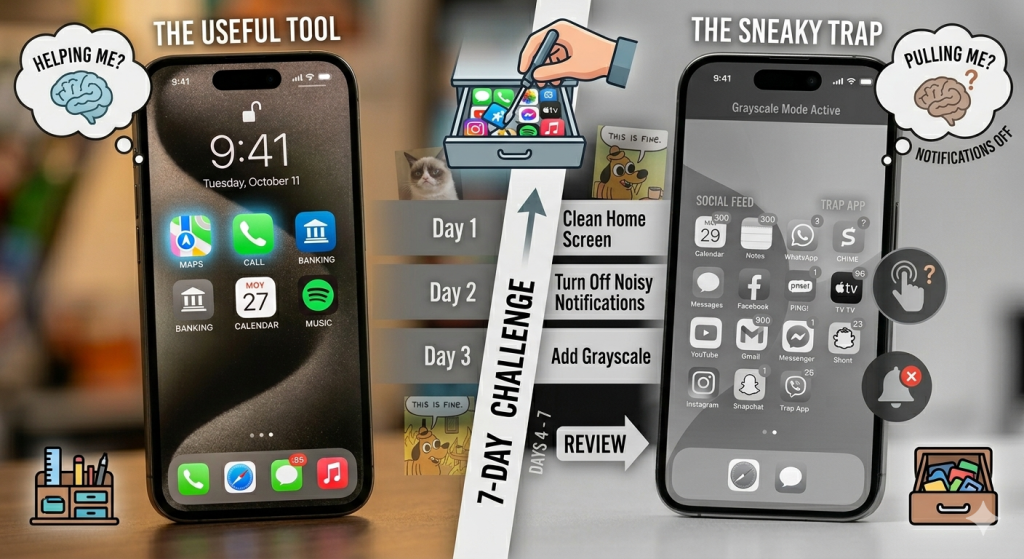
Try this simple test. Open your phone and ask, “Is this app helping me do something, or pulling me into something?”
- Maps, calls, banking, calendars, and music are usually useful phone tools.
- Endless feeds, autoplay videos, random notifications, and shiny app icons are often trap phone territory.
You do not need to hate your phone. You just need to separate the helpful parts from the sneaky parts. Think of it like cleaning a messy drawer, but with more memes.
How to Keep Essential Apps:
- Start by removing tempting apps from your home screen. You can still keep them, but make them harder to reach.
- Turn off non-human notifications, especially from social media, shopping, news, and entertainment apps.
- Then try grayscale mode. A black-and-white screen makes your phone feel less like a candy shop. It sounds too simple, but boring is useful here.
- Use app blockers or pause apps that make you wait before opening distractions.
Apps like One Goal: Locked In can help because they interrupt the automatic tap. Instead of opening a distracting app instantly, you have a goal to reach.
Don’t aim for everything in one day. Take this 7-day challenge as follows:
- Day 1: clean your home screen.
- Day 2: turn off noisy notifications.
- Day 3: add grayscale.
- Day 4: create one phone-free zone.
- Day 5: use an app blocker.
- Day 6: replace scrolling with music, walking, or reading.
- Day 7: review what actually helped.
What Phone Addiction Really Feels Like
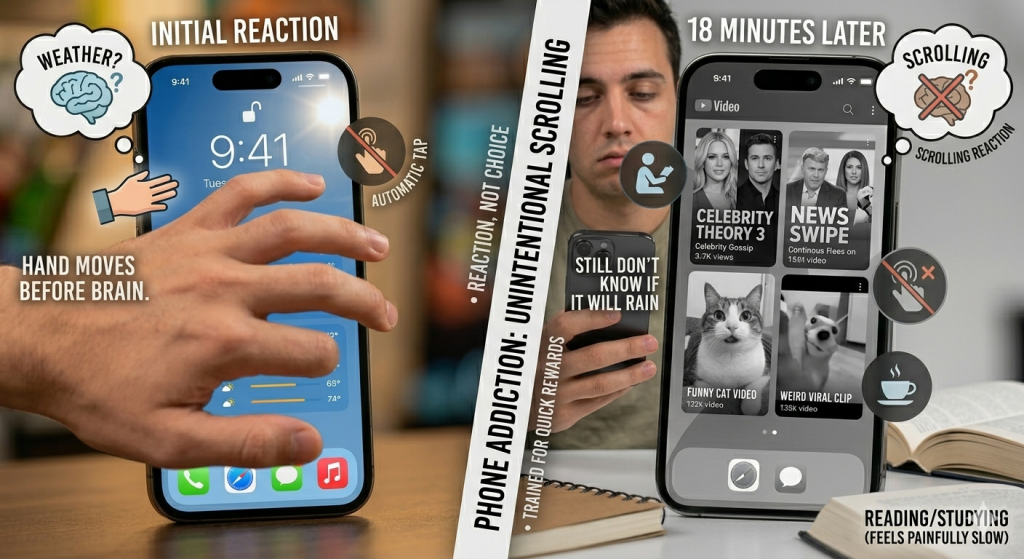
Phone addiction does not always look dramatic. Sometimes, it looks like opening your phone for the weather and leaving 18 minutes later. You now know three celebrity theories, but still have no idea if it will rain.
Most of the time, you are not choosing to scroll. You are reacting. Your hand moves before your brain joins the meeting.
Short videos are especially sneaky because each swipe promises a tiny surprise. Maybe the next one will be funny. Maybe useful. Maybe completely pointless, but weirdly impossible to leave.
Over time, your brain starts expecting quick rewards everywhere. Then normal things, like reading, studying, or cooking, can feel painfully slow. Your attention is not broken. It has just been trained badly.
The 15-Minute Separation Test
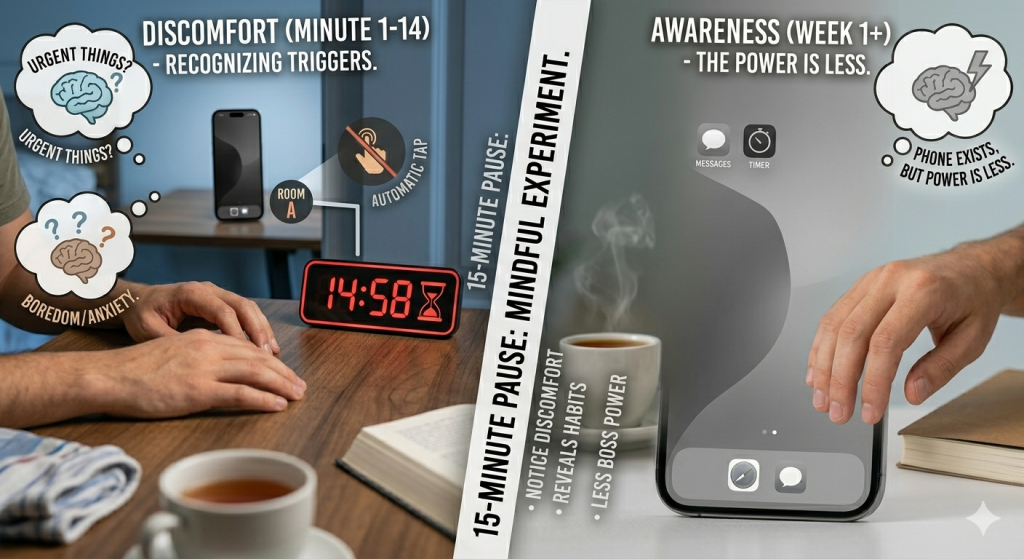
Here is a tiny experiment if you are learning how to detox from phone addiction. Put your phone in another room for 15 minutes.
Then do nothing exciting. Sit, walk, make tea, fold laundry, or stare out the window. The point is not to become instantly peaceful. The point is to notice what happens.
The first few minutes may feel weird. You might suddenly remember seven “urgent” things to check. This discomfort is useful information. It shows you when you usually reach for your phone. Maybe you scroll when you feel bored, tired, lonely, or anxious.
Once you spot the feeling, the habit becomes less invisible. You are no longer just “checking your phone.” You are avoiding something, soothing something, or filling a gap.
Repeat the 15-minute pause once a day. Same time is best, because your brain loves routines.
After a week, you may notice something surprising. Your phone still exists, but it feels less powerful.
Why Phone Detox Advice Has Changed
Old phone detox advice was mostly “delete the apps” and “have more discipline.”
In 2026, learning how to detox from phone addiction needs a smarter approach. Your phone is not just a device anymore. It is your map, wallet, camera, calendar, and message center. So the goal is to make it less addictive while keeping it useful.
Healthier phone use will probably not mean using no technology. The future is about intentional phones. You use them for connection, tools, learning, music, and real needs. You stop letting them fill every empty second.
People Also Want to Know
How do I break my phone addiction?
Break phone addiction by making scrolling harder, not life harder. Remove tempting apps from your home screen, turn off noisy notifications, use grayscale, add app blockers, and practise short phone-free pauses daily.
How long does it take to detox from a phone addiction?
A phone detox can feel easier after a few days, but lasting change usually takes a few weeks. Start with small daily pauses, reduce triggers, and add app limits. The goal is not perfection, but better control.
What is the 72 hour brain reset?
The 72-hour brain reset means taking a three-day break from overstimulating habits, like constant scrolling. It gives your brain time to calm down, notice triggers, and feel less pulled toward quick dopamine hits.
What are the five signs of phone addiction?
Five signs of phone addiction include checking your phone automatically, losing time while scrolling, feeling anxious without it, struggling to focus, and using it to avoid boredom, stress, or uncomfortable feelings.