- The 25/5 method helps when motivation feels low
- The 45/10 method supports deeper concentration and immersion
- Active recall strengthens memory better than rereading notes
- Blurting reveals what you know and miss
- The Feynman technique exposes gaps in understanding
- Cornell notes make reviewing material much clearer
Here’s why more and more people search for how to lock in and focus while studying. Your brain competes with short videos, endless notifications, and content made to grab attention fast. After enough scrolling, normal study tasks can start feeling weirdly slow and uncomfortable.
It is because your attention gets trained to expect constant novelty and quick rewards. Even a tiny phone check can pull you out of the zone. Then your brain needs time to settle back into the task again. The good news is that focus can still be trained back, and I will show you how.
Focus Block Methods That Help You Study Better
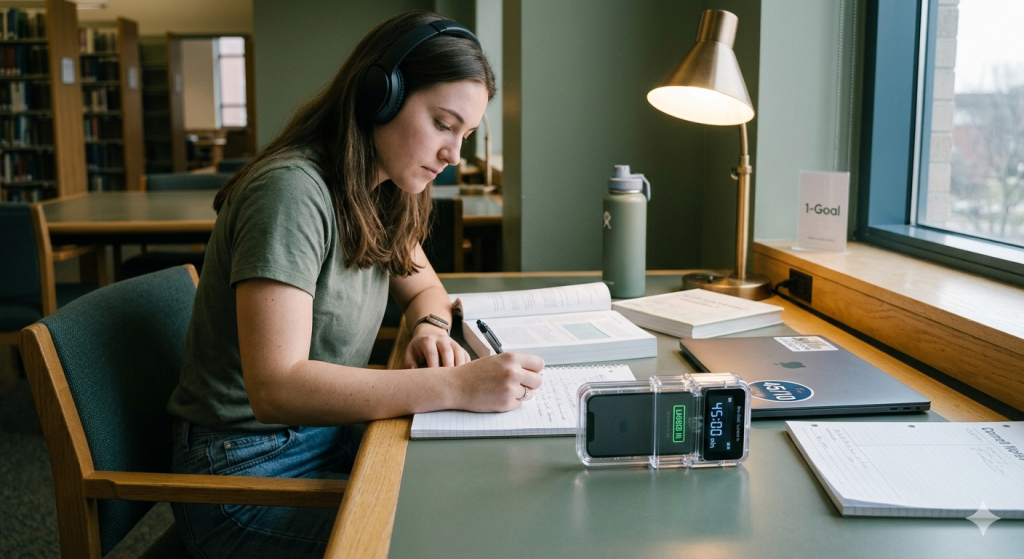
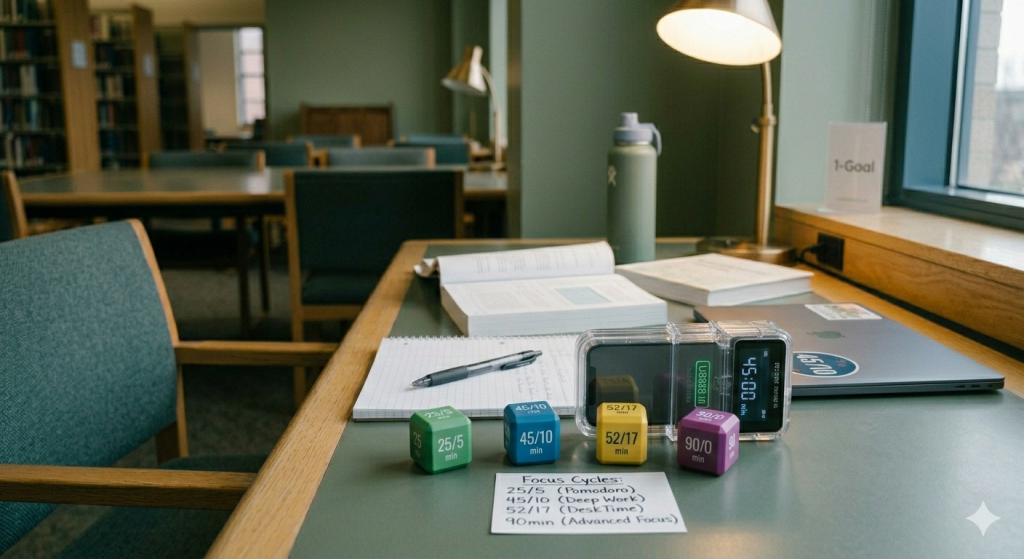
If you are learning how to lock in and focus while studying, timed study methods can make a big difference. The best-known one is the 25/5 method, also called the Pomodoro Technique. You study for 25 minutes, then take a 5-minute break.
It became popular because short blocks feel easier to start, especially when you feel distracted or overwhelmed.
A step up from that is the 45/10 method. This is not the original Pomodoro format, but many students prefer it for deeper work. You study for 45 minutes, then take a 10-minute break. The big advantage is simple: your brain gets more time to settle down before the break arrives.
With 45 minutes, you have a better chance of reaching real immersion.
The 52/17 method came from DeskTime’s productivity research. Their data found that many highly productive people worked for 52 minutes, then took a 17-minute break. DeskTime later published an updated version of that research showing an even longer 112/26 rhythm in a later study.
That does not mean you need such long blocks for studying, but it does show that longer focus periods can work well for some people.
Another similar idea is working in 90-minute focus blocks. This approach is often linked to natural energy rhythms and is usually best for advanced deep work, not casual revision.
It can be useful when you are doing essays, projects, or anything that needs long mental effort.
Still, for most students, 25/5, 45/10, or 52/17 are easier starting points. Short blocks are great when motivation is low. Longer blocks are better when the task needs depth.
If you want to keep track of your time, our focus app, One Goal, does the job for you: you set the time, lock in, and enjoy a distraction-free environment.
Other Popular Study Methods That Can Help You Lock In
Sometimes you need a method that helps you remember more, start faster, or stay accountable. These are a few popular study techniques that can really help.
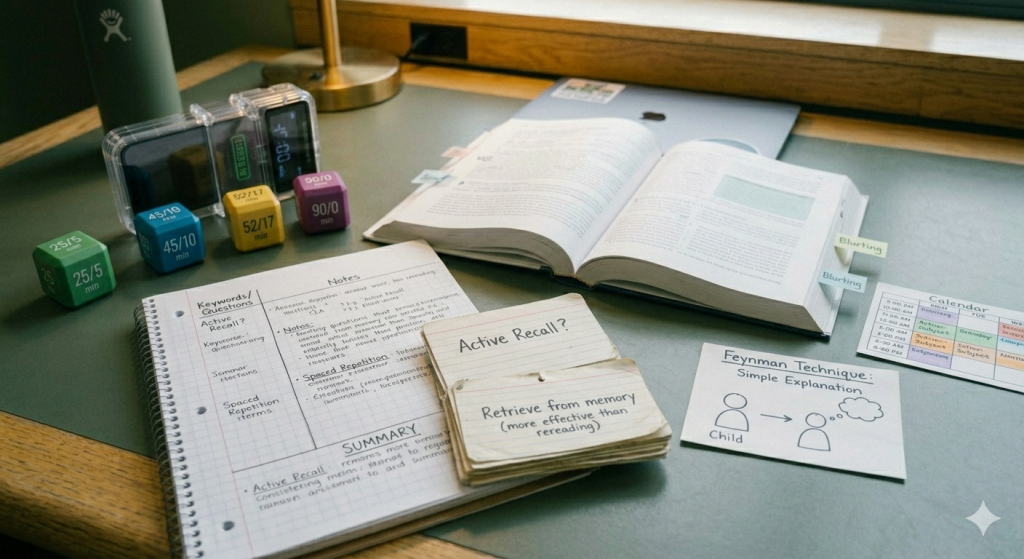
One of the best-known methods is active recall. This means testing your brain instead of just rereading your notes. You pause, look away, and try to remember the information on your own. It feels harder, but that is exactly why it works. Your brain learns more when it has to retrieve the answer.
A similar method is blurting. You study a topic for a short time, then write down everything you can remember without looking. It is a little messy, but very effective. It quickly shows you what you know and what still needs work.
Another popular approach is spaced repetition. Instead of reviewing something once and hoping for the best, you come back to it over time. This helps move information into long-term memory. It works especially well with flashcards and exam revision.
You can also try the Feynman technique. This means explaining a topic in very simple words, almost like teaching it to a child. If you cannot explain it clearly, you probably do not understand it well enough yet. It is a great way to spot weak areas.
For students who struggle with structure, time blocking can help. You give each subject a clear time slot instead of vaguely planning to study later. This makes your day feel more organized and reduces the mental chaos of deciding what to do next.
Some students also love body doubling or virtual study rooms. This means studying with another person, or even just alongside people online. You are still doing your own work, but the shared focus can make it easier to stay on track.
Finally, Cornell note-taking is useful if your notes tend to become a wall of confusion. This method helps you divide your page into sections for notes, questions, and key takeaways. It makes reviewing much easier later.
You do not need to use all these methods at once. The smartest move is to mix a few that fit your style. For example, you might use 45/10 for focus, active recall for memory, and time blocking for structure. That way, studying feels less random and much more effective.
Conclusion
Learning how to lock in and focus while studying is not about becoming perfectly disciplined. It is about making focus easier and distractions harder. When you use the right study blocks, remove what pulls your attention away, and choose methods that match your brain, studying starts to feel much more manageable.
Students Also Want to Know:
How to lock in and focus on studying?
To lock in while studying, remove distractions first. Put your phone away, clear your desk, close extra tabs, and start with just 5 minutes. Once you begin, use longer focus blocks, like 45 minutes, to build real concentration.
What is the 7 3 2 1 study method?
The 7 3 2 1 study method is a spaced-review plan. You revisit material 7 days, 3 days, 2 days, and 1 day before a test, or at similar gaps after learning it. It helps you remember more by reviewing before you forget.
How can I focus 100% while studying?
You cannot focus 100% all the time, but you can get close. Remove distractions, keep your phone away, study one task at a time, and use timed focus blocks. Aim for deep focus, not perfect focus.
How to avoid being lazy while studying?
To avoid feeling lazy while studying, make starting easier. Study for just 5 minutes, keep your desk clear, and remove your phone. Small starts build momentum, and momentum makes studying feel much less heavy.
Why is my focus so poor?
Your focus may feel poor because your brain is overloaded by constant distractions, short-form content, stress, or lack of rest. The good news is that focus is trainable. With fewer interruptions and better study habits, it can improve.